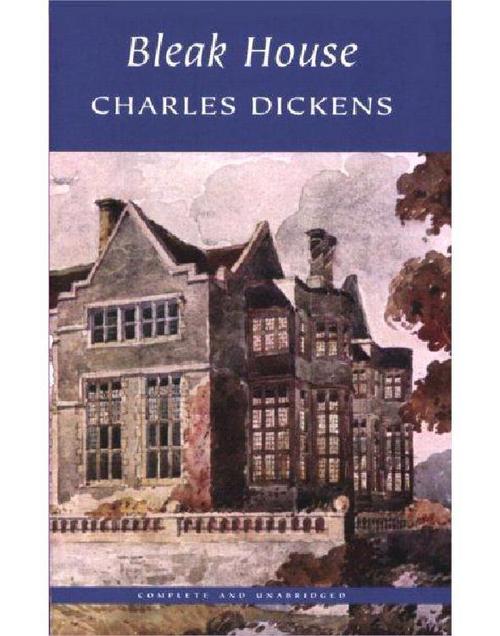
British Author Lynn Shepherd began her career as an author by turning the Jane Austen classic Mansfield Park into a murder mystery with her novel Murder at Mansfield Park. Now she's returning with The Solitary House (Tom-All-Alone'sin the UK), a Dickensian crime thriller inspired by Charles Dickens's Bleak House.
Tom-All-Alone's is a dark and gripping Victorian murder mystery, immersing the reader in a grim London underworld.
London, 1850. Fog in the air and filth in the streets, from the rat-infested graveyard of Tom-All-Alone's to the elegant chambers in Lincoln's Inn Fields, where the formidable lawyer Edward Tulkinghorn has powerful clients to protect, and a deadly secret to hide. Only that secret is now under threat from a shadowy and unseen adversary - an adversary who must be tracked down at all costs, before it's too late. Who better for such a task than young Charles Maddox? Unfairly dismissed from the police force, Charles is struggling to establish himself as a private detective. Only business is slow and his one case a dead end, so when Tulkinghorn offers a handsome price for an apparently simple job Charles is unable to resist. But as he soon discovers, nothing here is what it seems. An assignment that starts with anonymous letters leads soon to a brutal murder, as the investigation lures Charles ever deeper into the terrible darkness Tulkinghorn will stop at nothing to conceal.
To celebrate today's American launch of this book, the lovely folk at Random House US have five copies to give away to American residents. And for those Brits who want to get their hands on a copy too, Constable & Robinson have one of the UK editions to give away.
To be in with a chance of winning, email filmvsbook@gmail.com with "Lynn Shepherd Competition" in the subject matter and answer the following question:
The Solitary House is inspired by a Charles Dickens classic. But which one?
A. Oliver Twist B. A Christmas Carol C. Bleak House
First person narration has always been a tricky beast. Slippery to read, and, believe me, even harder to write. We can all name books that are told to us by one of the main characters, some of whom turn out to be - in that famous phrase – ‘unreliable narrators’. Narrators who don’t tell us everything they know, or withhold key facts only to spring them on us later, or – as in The Murder of Roger Ackroyd, one of the most celebrated examples – actually turn out to have been the killer all along.
Of course you can’t do that on film, or not very elegantly, anyway. Having an actor address the audience direct is a rather cumbersome device these days. It worked fine for Shakespeare, but modern viewers tend to find it grating after a while, and rarely suspend their disbelief that all the other actors can’t hear what’s being said as well.
So how does a screenwriter translate a book written from such a personal viewpoint into a viable film, and what do we, as viewers, lose or gain by the exchange?
I’m going to talk a bit about Bleak House here, and in particular that very fine BBC 2005 adaptation. Partly because Bleak House has a distinctive ‘double narrative’ structure which raises its own special challenges for the screen, and partly because I’ve echoed that structure in my own book, Tom-All-Alone’s/The Solitary House.
Bleak House is told by two people. One is a voice that we inevitably assume to be Dickens’ own – it’s written in the present tense and is forceful, energetic, and unflinching in pointing out the social evils of the day. The other voice is Esther Summerson’s, telling us the story of her own life as she looks back on the past. But the very fact that she’s looking back means she’s in possession of the ‘secrets’ of the story before she even starts, but we’re not given that information until it emerges in the course of her tale.
In Bleak House these two stories remain largely separate throughout most of the novel, though some characters do appear in both accounts. It’s not till very late on, as the book reaches its climax, that ‘Esther’s past’ and ‘Dickens’ present’ come together in one narrative. The first task for the screenwriter, then, is to fuse these two stories from the start, so that there’s one driving storyline. But of course there’s a price to be paid for doing that. By imposing the one ‘eye’, you lose the subtleties of the two ‘I’s.
One obvious example would be the death of little Jo, the crossing-sweeper, in the book, where Dickens famously steps back at the end of the scene and addresses the audience with a very typical tirade:
Dead, your Majesty. Dead, my lords and gentlemen. Dead, right reverends and wrong reverends of every order. Dead, men and women, born with heavenly compassion in your hearts. And dying thus around us every day.
How do you deal with that on screen? The 2005 adaptation (like others before it) has Mr Jarndyce actually speaking a version of those words, though not directly to camera, more as a voicing of his own private thoughts. That’s undoubtedly quite a tidy and practical solution, though it does come over as a little strained and unnatural. So how else could you do it? There was a very fine version of Tom Jones back in 1997 that had Henry Fielding wander into view every now and again, and talk about what was happening in the plot. That worked particularly well because Fielding is such an interfering narrator on the page, so having him do the same on pixels was a lovely light and witty touch. And they got round the ‘everyone can overhear’ point by freezing the action and having him wander about in a tableau of his own creations. Delightful.
And it has to be admitted that screen versions can do some things no writer ever can. For example, the only way Dickens can convey to us that Allan Woodcourt is attracted to Esther is by having her – in effect – tell us so, but it’s hard to bring that off without making her seem rather winsome and falsely modest. TV, on the other hand, can dramatise all the little nuances of glance and gesture that two people communicate to one another, and allow the viewer to draw their own conclusions. In fact, I think one of the reasons Esther works so much better on screen is the very fact that we don’t have to listen to her repeating all the praise people heap on her – TV shows us her actions and allows us to form our own judgment.
So – in short – there’s no one simple answer (is there ever?). The ‘I’ of a book will always give you the richer and deeper experience of its narrator, if only because you spend so much more time with them that way. But in the hands of a great film-maker, that character can come to life on the screen – can reveal new depths and complexities, and bewitch your watching ‘eye’….
- Lynn Shepherd
Lynn Shepherd’s novel Tom-All-Alone’s is out now in the UK from Corsair, and is published
in the US and Canada on May 1st under the title The Solitary House.
To win your own copy, check back with Film vs. Book next Tuesday 1st May for competition details...
 THIS COMPETITION IS NOW CLOSED.